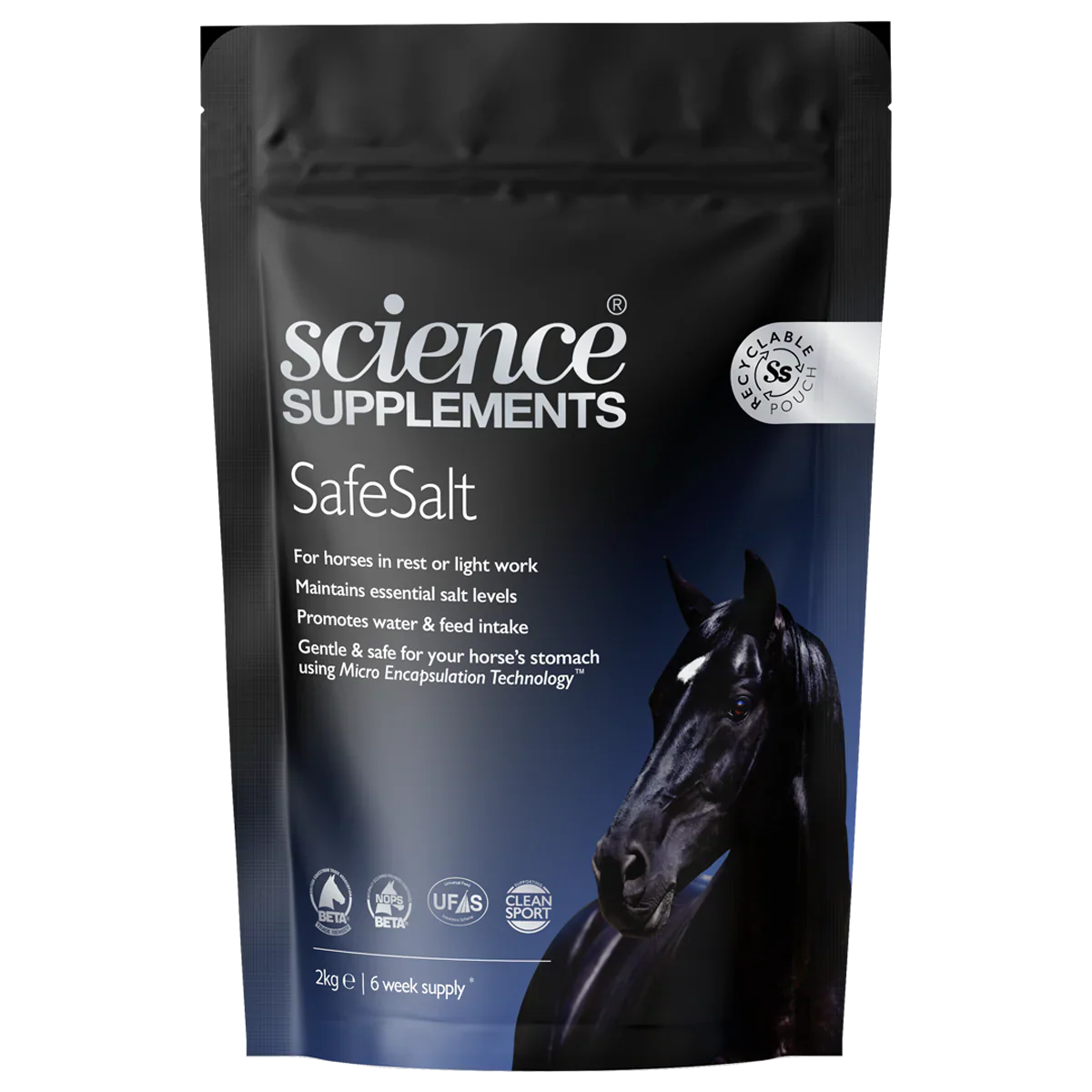
Science Supplements SafeSalt
Salt that is safe for your horse and their stomach. A unique electrolyte (NaCl; sodium and chloride) to overcome problems with palatability, gastric upset and gastric ulceration. Individual grains of salt coated in special oil which will not dissolve in the mouth or stomach. The oil coating dissolves in the small intestine where electrolyte uptake is optimal and gentle on the stomach unlike ordinary electrolytes.
Whilst salt and electrolytes can be added to the feed, horses often find these unpalatable and their granular nature means that it is easy for fussy horses to leave them at the bottom of the feed manger. There is also evidence that ordinary salt can cause or worsen gastric ulcers in horses. SafeSalt is a unique formulation that provides a palatable source of sodium and chloride and helps overcome these potential palatability problems.
What’s in it?
Salt (sodium chloride, chemical formula NaCl) is a key nutrient required for nerve and muscle function, maintenance of normal hydration and digestive, kidney, lung and heart function. Forage is rich in potassium and chloride and in some cases calcium (e.g. alfalfa) but most horses need supplemental salt (Na) in their diet. Horses in work, competing and racing require extra electrolytes to replace those lost in sweat, faeces and urine and sub-optimal electrolyte intake can result in poor performance as it is not possible to obtain sufficient electrolytes from forage or hard feed alone.
We use encapsulated Sodium Chloride to improve palatability, and prevent irritation of the stomach. The encapsulation agent is a type of oil. This oil is broken down by the natural digestive process in the small intestine, which allows for normal absorption of the electrolytes.
Activity level is the key influence of the sodium requirements of a horse, and to a lesser extent, whether the horse is growing, pregnant or lactating. Activity level has such a big influence because it results in the horse sweating, whereby the horse will lose both sodium and chloride alongside three other electrolytes. The variation in salt requirements range from around 5g daily for a 500kg horse at rest on a hay diet, to upwards of 50g daily for a horse in hard work which sweats regularly. This would be even higher if the horse was working hard in hot or humid conditions.
Salt that is safe for your horse and their stomach. A unique electrolyte (NaCl; sodium and chloride) to overcome problems with palatability, gastric upset and gastric ulceration. Individual grains of salt coated in special oil which will not dissolve in the mouth or stomach. The oil coating dissolves in the small intestine where electrolyte uptake is optimal and gentle on the stomach unlike ordinary electrolytes.
Whilst salt and electrolytes can be added to the feed, horses often find these unpalatable and their granular nature means that it is easy for fussy horses to leave them at the bottom of the feed manger. There is also evidence that ordinary salt can cause or worsen gastric ulcers in horses. SafeSalt is a unique formulation that provides a palatable source of sodium and chloride and helps overcome these potential palatability problems.
What’s in it?
Salt (sodium chloride, chemical formula NaCl) is a key nutrient required for nerve and muscle function, maintenance of normal hydration and digestive, kidney, lung and heart function. Forage is rich in potassium and chloride and in some cases calcium (e.g. alfalfa) but most horses need supplemental salt (Na) in their diet. Horses in work, competing and racing require extra electrolytes to replace those lost in sweat, faeces and urine and sub-optimal electrolyte intake can result in poor performance as it is not possible to obtain sufficient electrolytes from forage or hard feed alone.
We use encapsulated Sodium Chloride to improve palatability, and prevent irritation of the stomach. The encapsulation agent is a type of oil. This oil is broken down by the natural digestive process in the small intestine, which allows for normal absorption of the electrolytes.
Activity level is the key influence of the sodium requirements of a horse, and to a lesser extent, whether the horse is growing, pregnant or lactating. Activity level has such a big influence because it results in the horse sweating, whereby the horse will lose both sodium and chloride alongside three other electrolytes. The variation in salt requirements range from around 5g daily for a 500kg horse at rest on a hay diet, to upwards of 50g daily for a horse in hard work which sweats regularly. This would be even higher if the horse was working hard in hot or humid conditions.
Original: $21.50
-70%$21.50
$6.45Description
Salt that is safe for your horse and their stomach. A unique electrolyte (NaCl; sodium and chloride) to overcome problems with palatability, gastric upset and gastric ulceration. Individual grains of salt coated in special oil which will not dissolve in the mouth or stomach. The oil coating dissolves in the small intestine where electrolyte uptake is optimal and gentle on the stomach unlike ordinary electrolytes.
Whilst salt and electrolytes can be added to the feed, horses often find these unpalatable and their granular nature means that it is easy for fussy horses to leave them at the bottom of the feed manger. There is also evidence that ordinary salt can cause or worsen gastric ulcers in horses. SafeSalt is a unique formulation that provides a palatable source of sodium and chloride and helps overcome these potential palatability problems.
What’s in it?
Salt (sodium chloride, chemical formula NaCl) is a key nutrient required for nerve and muscle function, maintenance of normal hydration and digestive, kidney, lung and heart function. Forage is rich in potassium and chloride and in some cases calcium (e.g. alfalfa) but most horses need supplemental salt (Na) in their diet. Horses in work, competing and racing require extra electrolytes to replace those lost in sweat, faeces and urine and sub-optimal electrolyte intake can result in poor performance as it is not possible to obtain sufficient electrolytes from forage or hard feed alone.
We use encapsulated Sodium Chloride to improve palatability, and prevent irritation of the stomach. The encapsulation agent is a type of oil. This oil is broken down by the natural digestive process in the small intestine, which allows for normal absorption of the electrolytes.
Activity level is the key influence of the sodium requirements of a horse, and to a lesser extent, whether the horse is growing, pregnant or lactating. Activity level has such a big influence because it results in the horse sweating, whereby the horse will lose both sodium and chloride alongside three other electrolytes. The variation in salt requirements range from around 5g daily for a 500kg horse at rest on a hay diet, to upwards of 50g daily for a horse in hard work which sweats regularly. This would be even higher if the horse was working hard in hot or humid conditions.